One Big Word
- 0.0
- Rating
- 10.00K
- Installs
- Free
- Price
 Analysis by App-foxy
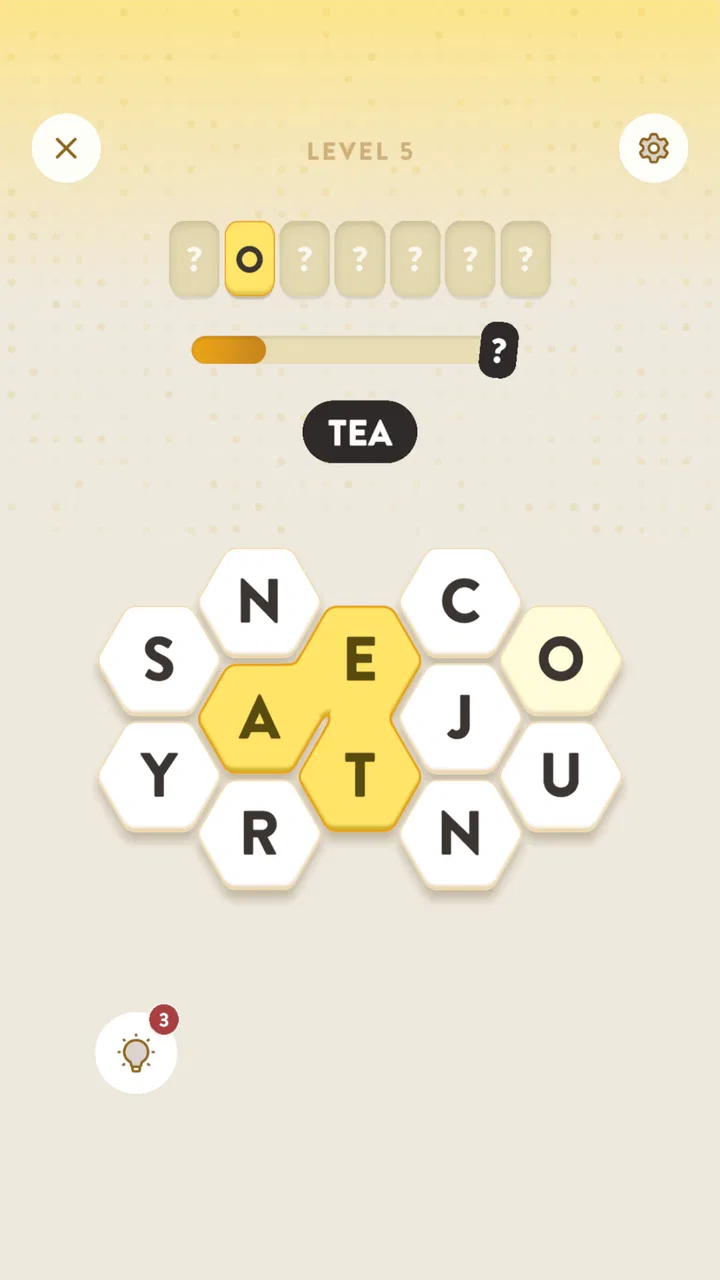
One Big Word is a compact word game from Fugo Games that turns each level into a search for a larger target hidden behind smaller discoveries. I found the idea easy to understand within seconds, but not so shallow that it becomes meaningless: the pleasure comes from noticing connections, testing possible words, and gradually working toward the level’s main answer. It is free to download, aimed at Everyone, and belongs to the kind of game I would keep nearby for short breaks rather than long, uninterrupted sessions.
That distinction matters. This is not presented as a crossword replacement with a large grid, nor as a spelling lesson built around formal exercises. Its appeal is more immediate: look for words, make progress, and see how those words lead toward one bigger word. If you enjoy wordplay but do not always have the patience for a full newspaper-style puzzle, the basic concept is inviting. My overall impression is positive, although the game’s long-term value depends heavily on how much variety and challenge its level design can maintain.
How the central word hunt feels in everyday play
The strongest part of the design is the layered objective. A small word can feel satisfying on its own, but here it also acts as a step toward a broader goal. That gives each discovery more purpose than simply filling an empty space. I found myself switching between quick guesses and slower observation: sometimes an obvious word opens the path, while at other times the useful answer is the one I nearly ignored because it looked too ordinary.
You May Also Like

 Blood Strike: 2.5 Anniversary
Blood Strike’s Loadouts Turn Every Drop Into a Tactical Gamble
A close look at Blood Strike’s custom loadouts: how fast access to signature weapons reshapes its battle royale rhythm, rewards preparation, and narrows the gap between fights.

 Pandora - Music & Podcasts
Pandora’s Music Is Easy to Start, but Harder to Recover
Pandora’s strength is its low-effort path from a seed to a station. Its weak spot is how much confidence it asks you to place in connection, setup, and quiet recovery.

 8 Ball Pool
 Is Built on Rivalries, Rematches, and Routine
A close look at the rivalries, rematches, shared routines, and unanswered safety questions that turn a quick pool match into a persistent mobile community.

 Samsung Music
’s Quiet Strength Is Playing What You Already Own
Its reach comes less from spectacle than from dependable access to a personal library. That simplicity is both the app’s strongest retention engine and its ceiling.

 AccuWeather: Weather Radar
AccuWeather Review: A Quick, Clear Forecast for Everyday Decisions
For everyday plans, the best forecast is the one you can understand quickly. AccuWeather makes rain timing, radar, and local conditions easy to act on, with a few trade-offs.

 Hill Climb Racing
Why Hill Climb Racing Still Turns Crashes Into One More Run
A tiny car, a bumpy hill and one more upgrade: Hill Climb Racing keeps resurfacing because its simple chaos makes every near-miss feel personal.
More From Our News Desk
View All News


This structure makes the game approachable for people who like casual word puzzles but do not want a complicated rulebook. The store summary describes the central premise clearly, and the experience follows that premise rather than burying it under unrelated systems. You are there to find smaller words and reach the larger one. That focus is a strength because the game can be picked up without a tutorial-heavy commitment.
A realistic use case is a short wait at a station, a quiet coffee break, or the few minutes before going to sleep. I would not choose it when I want a story, a competitive match, or a long strategic session. I would choose it when I want my attention occupied without needing sound, a large time investment, or a complicated setup. The format suits interruptions because a word search can be approached in small pieces, even if I do not finish a level immediately.
There is also a useful mental rhythm to the design. I tend to begin with the most familiar possibilities, then look for less obvious combinations once those fail. That makes the game feel more thoughtful than simply tapping random letters. A practical tip is to avoid committing too quickly to the first apparent pattern. Step back, scan the whole puzzle, and consider whether a small word might be useful because of its relationship to the final target rather than because it is the most common word available.
Why the small-to-large progression works
The smaller discoveries provide frequent moments of progress, while the larger word gives the level a destination. In many word games, finding an answer can feel like an isolated event. Here, the relationship between answers is the reason to continue. I liked that sense of accumulation because it gives a hesitant player several chances to regain momentum instead of making every level depend on one immediate flash of insight.
That same structure can create pressure, though. When I know there is one important word waiting at the end, I can become overly focused on guessing what it might be. Sometimes that helps me recognize useful clues; sometimes it narrows my thinking too much. The best way to handle that tension is to treat early words as evidence, not as a rigid instruction. If a guess seems plausible but does not help the wider pattern, I move on rather than forcing it.
This is one of the more valuable habits the game encourages: separate finding a word from proving that it belongs to the level’s larger idea. That small change in approach prevents a lot of wasted attempts. It also makes the experience more satisfying for players who enjoy language relationships rather than just rapid completion.
The game is likely to suit mixed-age households because its content rating is Everyone and its rules are simple to explain. I can imagine handing the device to a family member and having them understand the objective without a long introduction. Still, ease of entry does not mean every level will feel equally easy for every player. Vocabulary, spelling habits, and familiarity with word associations can all affect how quickly someone sees the intended path.
Where progress can become less comfortable
The main friction is the possibility of getting stuck between a reasonable answer and the answer the level expects. Word games are especially sensitive to this because players may know several valid words that seem suitable. If the game’s accepted vocabulary feels narrow, frustration can appear even when the player is thinking intelligently. I would judge the experience by how fairly it acknowledges that difference, not merely by how difficult the puzzles are.
Hints, if available during play, should be treated as a limited resource rather than an automatic solution. My preferred workflow would be to spend a little time identifying the obvious smaller words, then use assistance only after I have tested the broader pattern. That preserves the discovery element. Using help too early may get me past a level, but it removes the useful reasoning that makes this format enjoyable in the first place.
Another practical tip is to play in two passes. On the first pass, collect the words that arrive naturally without judging them. On the second, compare them and ask what common direction they suggest. This is more effective than repeatedly staring at the same portion of the puzzle. It also reduces the temptation to make random guesses simply because progress has slowed.
Players who need a clear, visible difficulty curve should pay attention to how the later levels feel over time. The current version is 0.1.10, which places the game at an early stage of its development. That does not make it unsuitable, but it does mean I would approach it as a growing word game rather than as a mature, fully established puzzle library. Early versions can be enjoyable while still leaving room for refinement in balance, variety, and presentation.
Spending, fairness, and the free entry point
One Big Word is free to download, with in-app purchases listed from $1.49 to $5.99 per item. That gives the game an accessible starting point, but it also means the real spending experience depends on what those purchases do during play. I would not assume that buying anything is necessary, nor would I assume that the free path offers the complete experience. The responsible approach is to begin without spending and see whether the normal rhythm feels satisfying.
For a word game, fairness is less about visual advantage and more about whether money changes access to solutions or progress. If a purchase provides convenience, I would ask whether I am paying to save time or paying because the puzzle has become unreasonably blocked. Those are very different situations. A fair design lets a patient player continue learning and solving, while purchases remain optional support rather than a requirement for ordinary progress.
Because the listed purchase range includes several individual price points, I would set a personal boundary before playing. For example, I might decide that the free experience must stand on its own and that any later purchase should be for convenience, not impulse. This is especially useful in a game built around moments of frustration: being stuck is exactly when a player is most likely to spend without considering whether the purchase improves the overall experience.
I also prefer to evaluate the game over several sessions before deciding whether it deserves money. A single clever level can create enthusiasm, but sustained value comes from consistent puzzle quality. If I am still enjoying the search after the novelty of the central idea has settled, a small optional purchase may feel reasonable. If the main attraction fades quickly, spending more will not solve that underlying problem.
How it compares with familiar word-game alternatives
Compared with a traditional crossword, this game appears more focused and less dependent on a large clue structure. A crossword rewards broad knowledge across many categories and often asks the player to manage crossing answers. One Big Word is more direct: the smaller discoveries are connected to one larger destination. I would choose the crossword when I want a longer, denser challenge, and this game when I want a cleaner objective with less visual commitment.
Compared with a daily guessing game, the appeal is different as well. A daily format often creates a shared routine around one answer, while this style of play is better suited to continuing whenever I have time. It does not need to become part of my morning schedule to be useful. That flexibility is valuable, although players who love social comparison or a single communal challenge may prefer a game built around those elements.
It also differs from word searches that ask players to scan a fixed grid for hidden terms. In a standard word search, the satisfaction comes from visual detection and completion. Here, the important question is not only “Where is the word?” but also “How does this word help reveal the bigger one?” That added relationship gives the game a more interpretive quality. It may appeal to players who find ordinary word searches too mechanical.
On the other hand, someone seeking vocabulary study should be cautious about treating it as a formal learning tool. The game can encourage attention to spelling and associations, but its purpose is entertainment. I would recommend a dedicated language-learning app for structured lessons, pronunciation, definitions, or measurable study goals. This title is better understood as a playful mental exercise that happens to involve words.
Who will enjoy it, and who should skip it
I would recommend One Big Word to players who like discovering patterns, solving in short sessions, and working from several modest clues toward one satisfying result. It is particularly suitable for someone who wants a low-pressure game to open between tasks. The simple premise also makes it easy to share with a friend: one person can suggest possible words while the other checks whether they fit the level’s direction.
I would be more cautious recommending it to players who need a deep competitive system, a story campaign, or a clearly documented set of advanced mechanics. The verified details establish the game’s word-puzzle identity, but they do not establish a tournament structure, social ranking, or narrative layer, so I would not choose it expecting those things. Likewise, if you dislike guessing games where several answers may initially seem plausible, the central design may feel irritating rather than relaxing.
People who are sensitive to spending prompts should begin with a clear plan. Free access is a genuine advantage, but optional purchases can still affect how comfortable the experience feels if assistance becomes tempting. I would also avoid judging the game solely by its early levels. The concept is easy to grasp quickly; the important question is whether the later puzzles continue to make the connection between small words and the big target feel earned.
What I would check before committing to it
My first check would be whether the game accepts the kinds of words I naturally try. When I find a plausible answer that is rejected, I want the next attempt to teach me something about the puzzle rather than simply tell me that my vocabulary is outside an invisible boundary. That is a crucial trust issue for any word game, because players need to believe that success comes from reasoning instead of guessing the developer’s preferred wording.
My second check would be the balance between challenge and assistance. A good hint should help me see a route without removing the satisfaction of reaching the big word. If assistance turns every difficult moment into a purchase prompt, the free entry point becomes less meaningful. I would therefore play several levels without using help and notice whether the game remains enjoyable when I solve slowly.
My third check would be variety. The central loop is clear, but repetition can arrive quickly if the same types of relationships appear again and again. I would look for changes in how the smaller words guide me, not merely changes in the target vocabulary. Variety in reasoning matters more than a long list of answers that all require the same trick.
There is also a practical device question. The minimum operating-system requirement is Android 8.0, so compatible Android users can consider it without needing a recent phone. I would still leave enough free attention for careful reading, since word puzzles are less enjoyable when played while distracted. A small screen is not automatically a problem here, but the experience depends on being able to inspect the puzzle comfortably.
A measured verdict on trust and value
Fugo Games has built a straightforward premise with a useful layer of progression: small words are not just collectibles, but steps toward a more important answer. That makes the game easy to recommend as a casual experiment, especially because it is free to start and carries an Everyone age rating. It has a clear identity instead of trying to combine wordplay with unrelated genres.
My caution is equally clear. The version number shows that the product is still early, and the listed in-app purchases mean I would evaluate the free experience before spending. I would not buy simply because a difficult level creates pressure. I would spend only if the puzzle quality remains consistent, the assistance feels optional, and the purchase improves convenience without replacing fair progression.
For me, One Big Word works best as a quiet, repeatable break: focused enough to engage my mind, simple enough to start immediately, and structured around a final discovery that gives each level direction. It is not the right choice for every word-game fan, particularly anyone looking for a full crossword experience or a competitive community. But if you enjoy connecting modest clues to one larger idea, I think it is worth trying without spending first.
In the end, I would describe One Big Word as promising rather than definitive. Its strongest asset is the clarity of its central hunt, while its biggest test will be whether future play continues to feel fair, varied, and rewarding. Start with the free path, play patiently, and judge the game by the quality of its discoveries—not by how quickly it encourages you to move past a difficult level.
FAQs for One Big Word
01What is One Big Word, and how does the game work?
One Big Word is a word-based puzzle game focused on finding, building, or identifying a large target word from the letters or clues presented on screen. The gameplay is designed to be simple to understand but increasingly challenging as levels progress. It is suitable for players who enjoy vocabulary games, quick brain exercises, and relaxed sessions that can be played at their own pace.
02Is One Big Word free to download and play?
One Big Word can generally be downloaded without an upfront payment, although the exact availability of free content may depend on the version and platform. Like many mobile puzzle games, it may include advertisements, optional purchases, extra hints, or other paid features. Before installing, users should check the store listing for current pricing, in-app purchase details, and any restrictions on the free version.
03Does One Big Word require an internet connection?
The basic word puzzles may be playable without a constant internet connection, which makes One Big Word convenient for travel, commuting, or areas with limited coverage. However, certain features—such as advertisements, purchases, synchronization, updates, leaderboards, or online events—may require access to the internet. Availability of offline play can also vary according to the app version and device.
04Is One Big Word appropriate for children and educational use?
One Big Word may be appropriate for older children, teenagers, and adults who are comfortable reading and spelling in the language supported by the game. It can encourage vocabulary development, concentration, pattern recognition, and problem-solving, but difficulty and word selection may vary. Parents should review the store age rating, advertising, in-app purchases, and privacy information before allowing younger children to play.
05What should I do if I encounter difficult puzzles or technical problems?
When a puzzle becomes difficult, it is usually best to review the available letters or clues carefully, try common word combinations, and save hints for stages where they are genuinely needed. If the app freezes, loses progress, or fails to load, restarting it and checking for updates may help. For persistent issues, contact the developer through the official app-store support page and include your device and operating-system details.
Pros
- Simple wordplay makes it easy to pick up and play.
- Short rounds fit well into quick breaks or commutes.
- Progressive challenges keep the experience engaging over time.
- Clean presentation makes words easy to read on small screens.
- Helpful hints can assist when a puzzle becomes difficult.
Cons
- Some puzzles may feel repetitive after extended play sessions.
- Later levels can become noticeably more challenging without hints.
- Hint systems may be limited or tied to in-game resources.
- The game offers less appeal to players seeking action or variety.
- Ads may interrupt play
- depending on the version and device.

One Big Word
Gallery